HCI Project
Design principles
Design of experiment to investigate how AI assistants can affect human desicion making
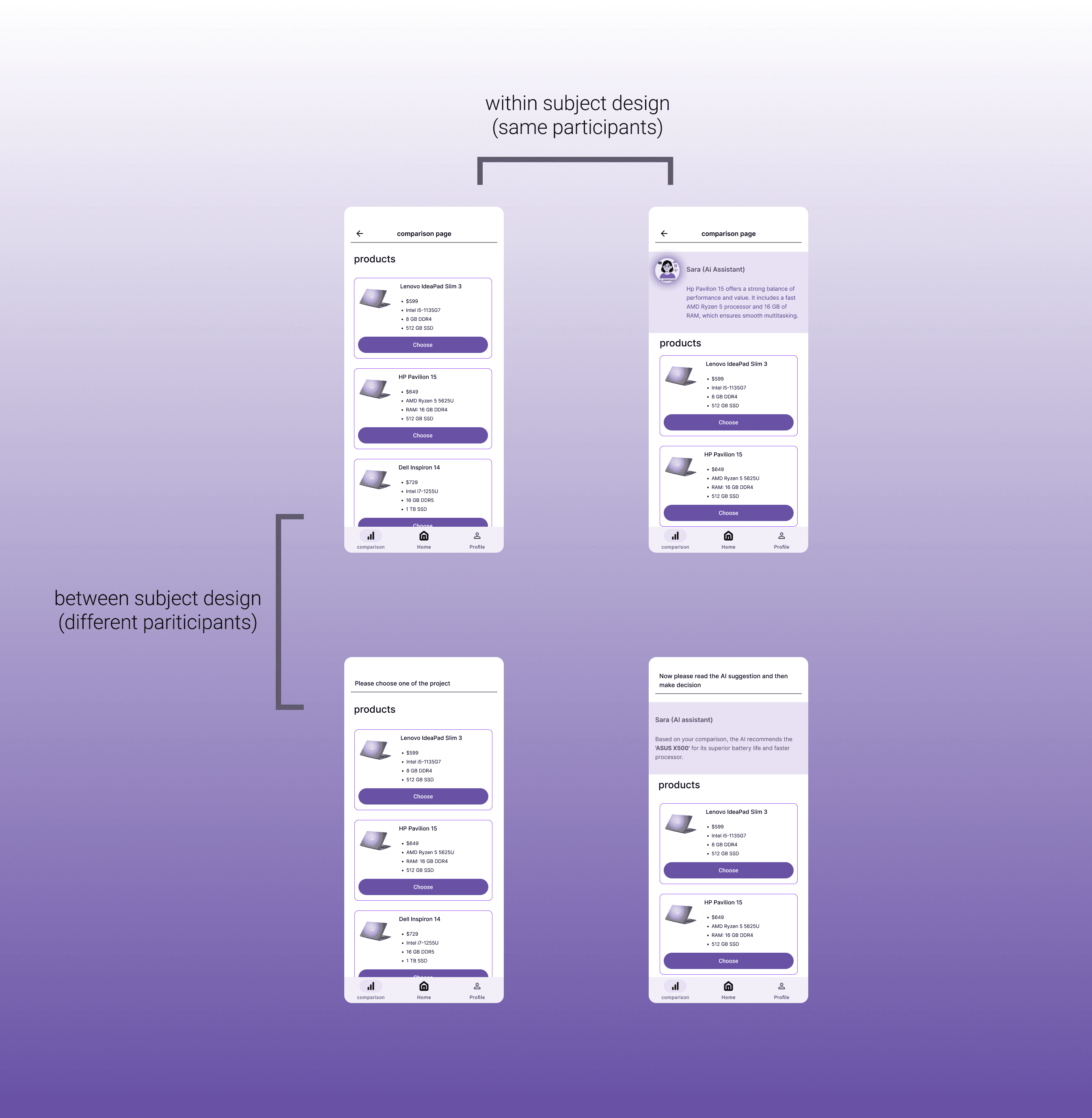
This project explores how AI recommendations affect user decisions in digital product experiences. As AI becomes a common feature in online platforms, users often see suggestions without understanding why they appear or how much they should trust them. The goal of this project was to design and test an AI-supported decision flow that feels transparent, supportive, and user-centered.
I led the UX work end to end, including research design, interaction and prototype design, survey construction using Maze, and data analysis. The experience was designed as a simple shopping simulation where users selected digital products based on text-only specifications. After making a choice, users received an AI recommendation, either as a basic suggestion or with a short explanation. Users could then keep or change their decision.
To evaluate the experience, I combined quantitative UX metrics and qualitative user feedback. Quantitatively, I measured whether users changed their choice, how their confidence shifted, and how satisfied they felt with the AI interaction. Qualitatively, I analyzed open-ended responses to understand why users followed or ignored the recommendation.
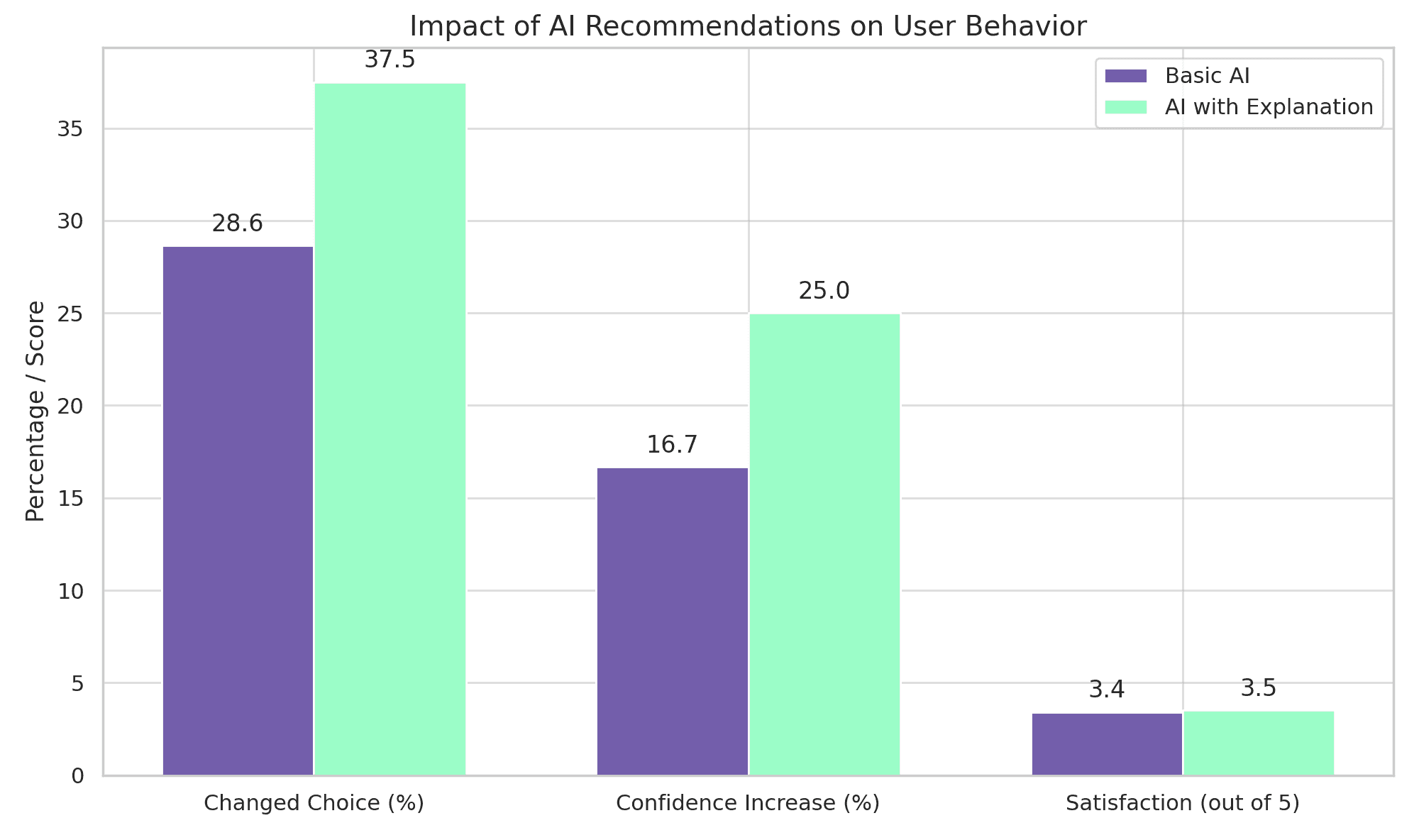
The results showed that AI recommendations with explanations performed better from a UX perspective. Users were more likely to change their choice, felt more confident in their decision, and reported slightly higher satisfaction when the AI explained its reasoning.
To understand the motivation behind these changes, I looked at users’ written feedback.
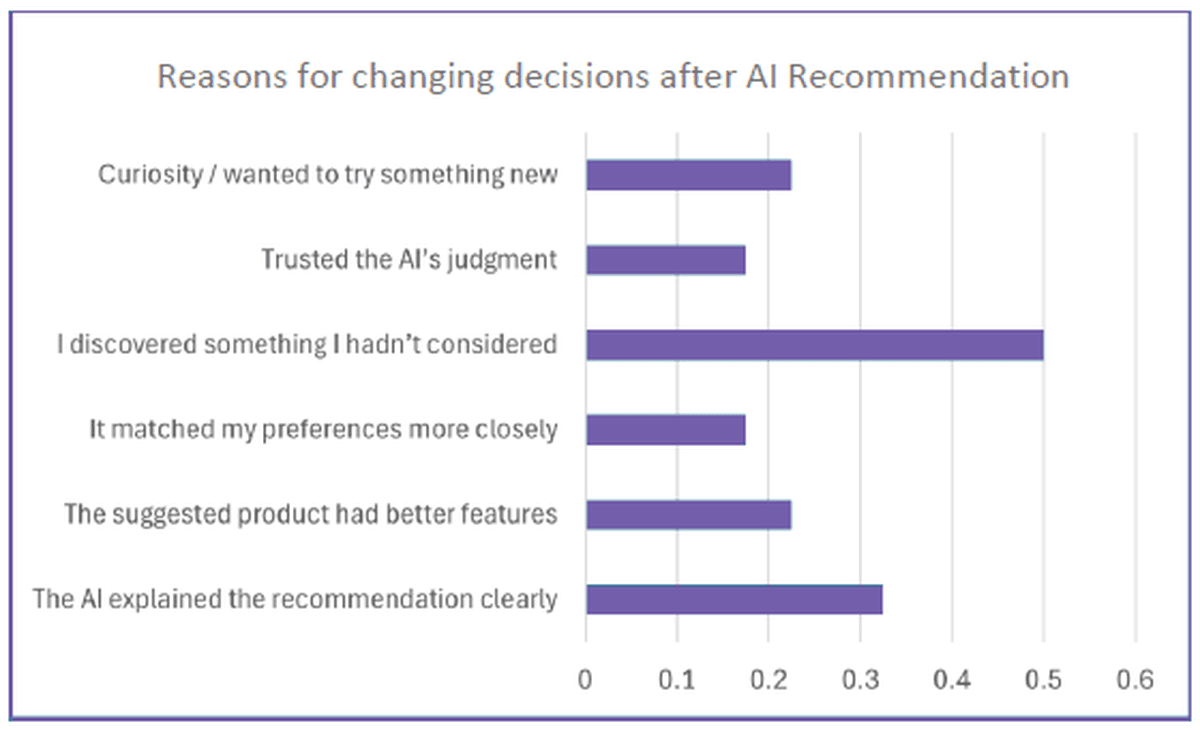
Users most often changed their decision because the explanation clarified trade-offs, matched their priorities, or highlighted details they had not considered. This shows that even short explanations can improve trust and decision quality without removing user control.
Overall, this project shows how explainable AI can be designed as a UX feature, not just a technical add-on. By focusing on clarity, transparency, and user autonomy, the design supports confident decision-making while keeping users in control.